

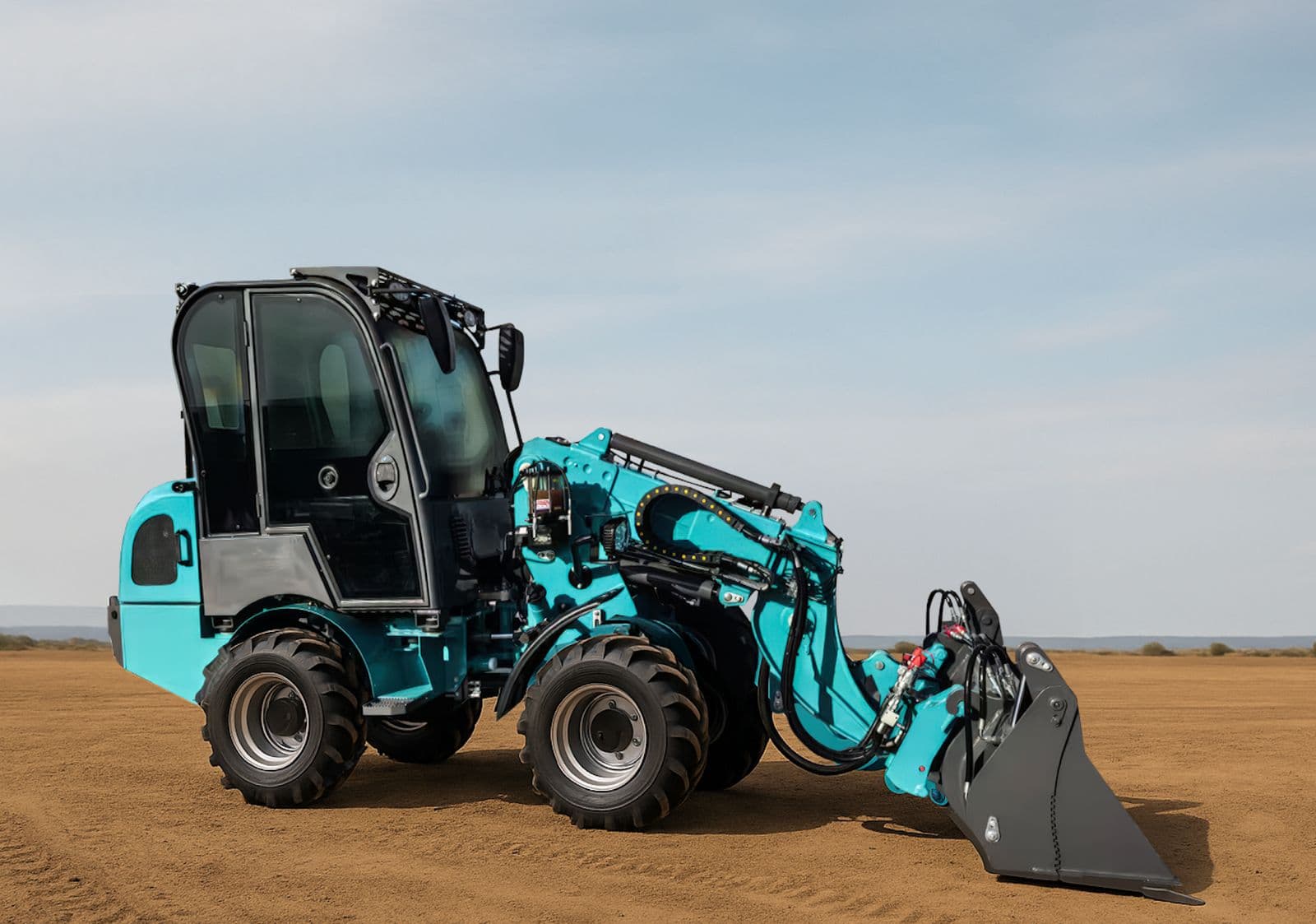
Investing in a loader for agricultural operations is not just about buying another machine. With the right model, daily feed, silage, manure, bale, and pallet-handling work is completed faster. With the wrong choice, cycle times get longer, the operator gets tired more quickly, and machine operating costs increase.
That is why the first factor to look at when choosing a telescopic loader for agriculture is not just engine power. What really matters is how well the machine fits the actual workflow.
1. Define your daily task list clearly
The first step is to write down exactly what you expect from the machine. The most common agricultural applications include:
- silage and feed loading
- bale transport and stacking
- manure loading
- trailer filling
- palletized feed or bag handling
- daily maneuvering in tight farm spaces
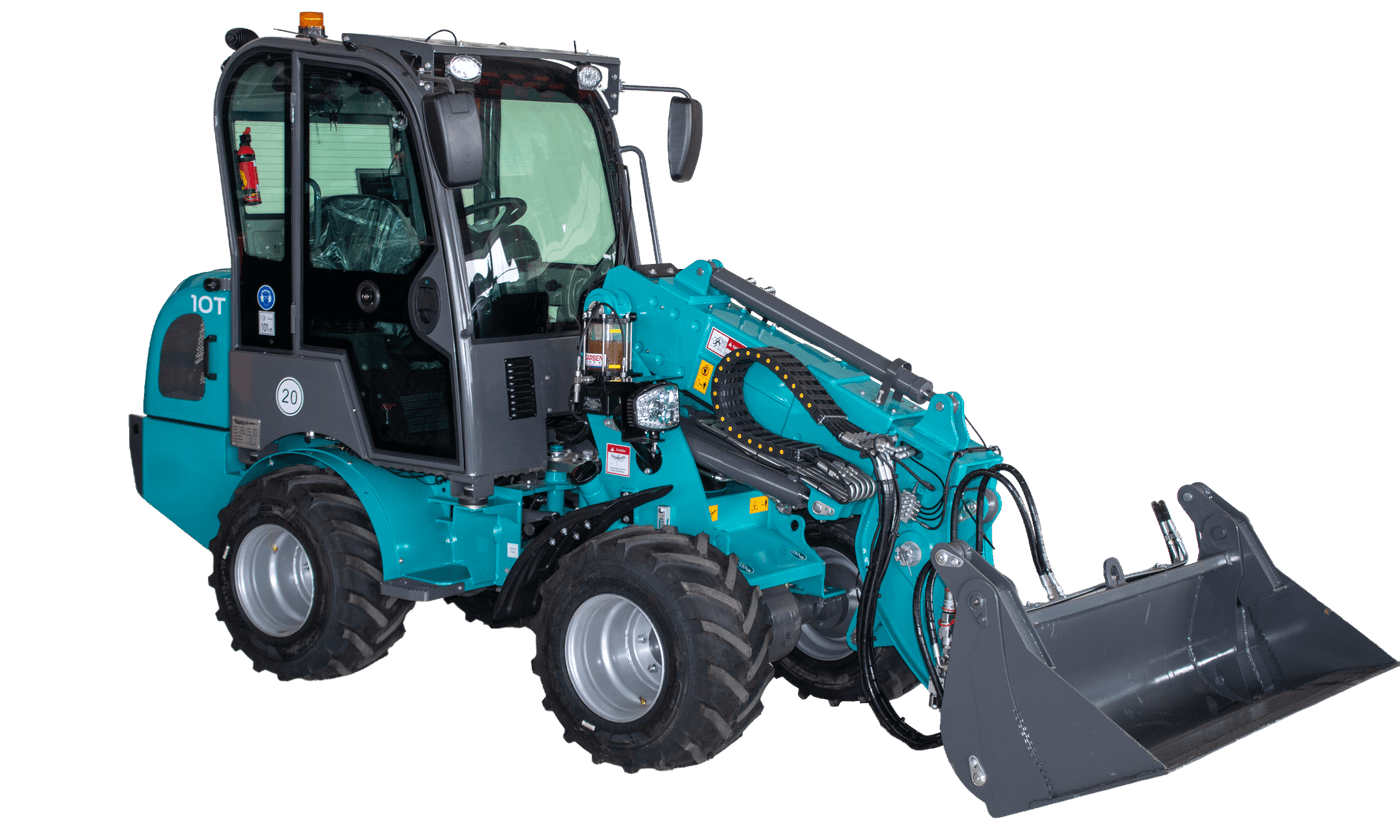
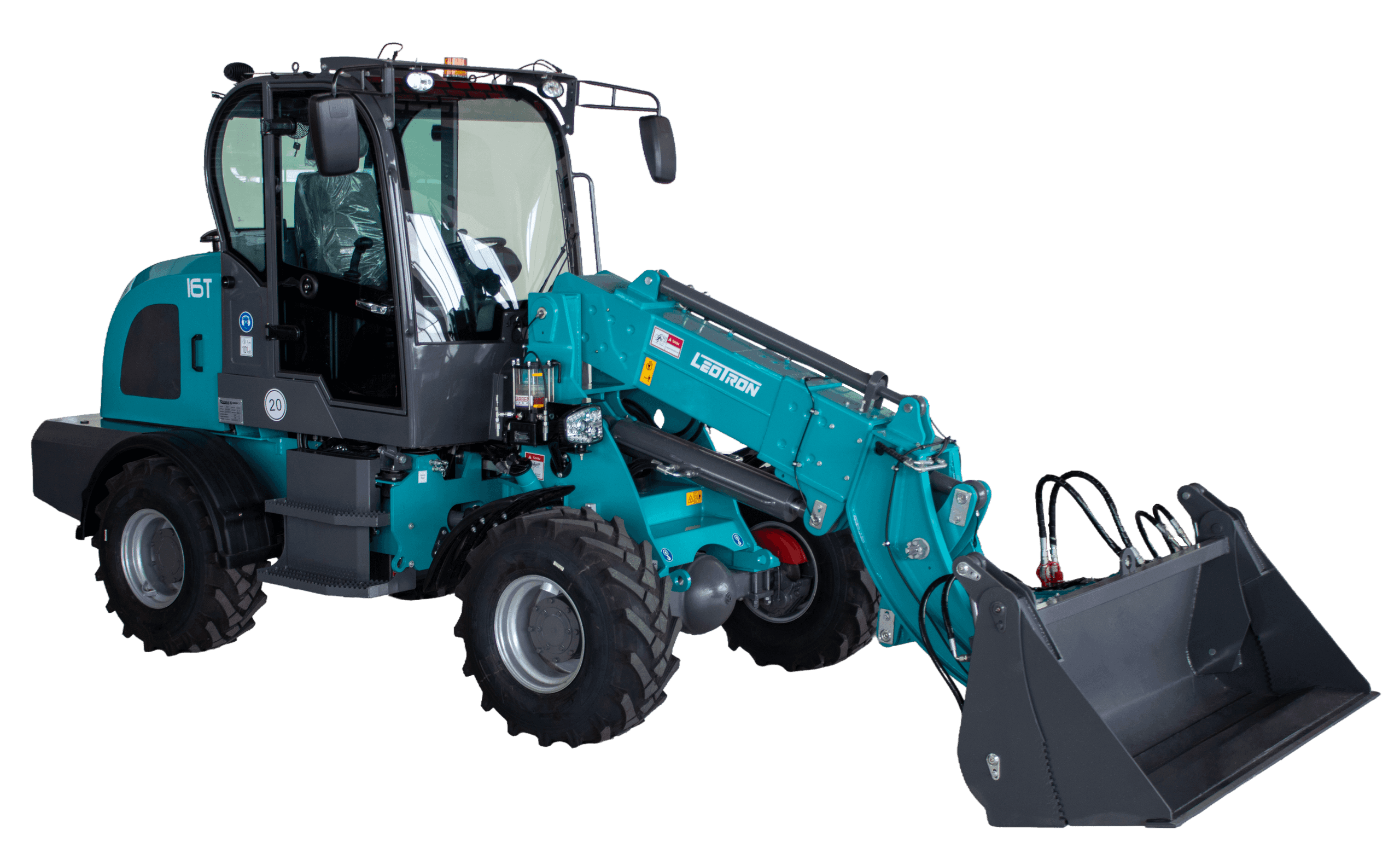
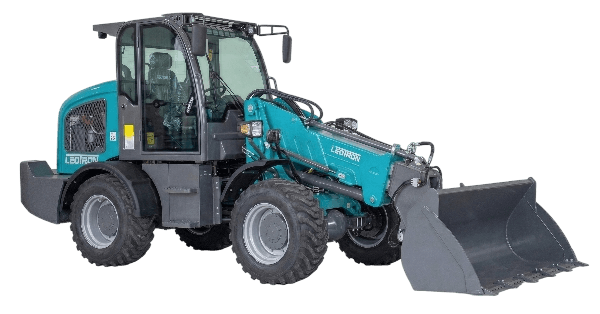
If most of the work consists of tight maneuvers and light daily cycles, a compact structure becomes a priority. In those scenarios, agile models such as H10T can be more efficient. For more balanced capacity and general-purpose use, M16T becomes the stronger fit. For heavier loads and higher dumping needs, M25T is better suited.
2. Look beyond carrying capacity and consider reach needs as well
Many agricultural businesses focus on lift capacity, but stacking height and dump height are just as decisive. In particular, these questions should be answered:
- How many layers of bales will be stacked?
- What is the loading height of the trailer or feed mixer wagon?
- Is there an upper point in the barn or yard that must be reached?
Even if a machine can lift the load, the operation slows down if it cannot reach the required height safely. That is why reach height and stability should always be evaluated together in telescopic loader selection.
3. Ground conditions and site layout directly affect the choice
Ground conditions in agricultural businesses across Turkey do not stay the same all year. Summer means dust, winter means mud, some regions have hard ground, and many farms have narrow access routes. That directly affects:
- traction needs
- turning ability
- daily maintenance discipline
- operator visibility and control precision
Compact dimensions are especially valuable where there are narrow passages, indoor spaces, and constant maneuvering. In open fields, high-cycle workloads, and heavier material flow, stronger and more balanced platforms take the lead.
4. Attachment compatibility determines total efficiency
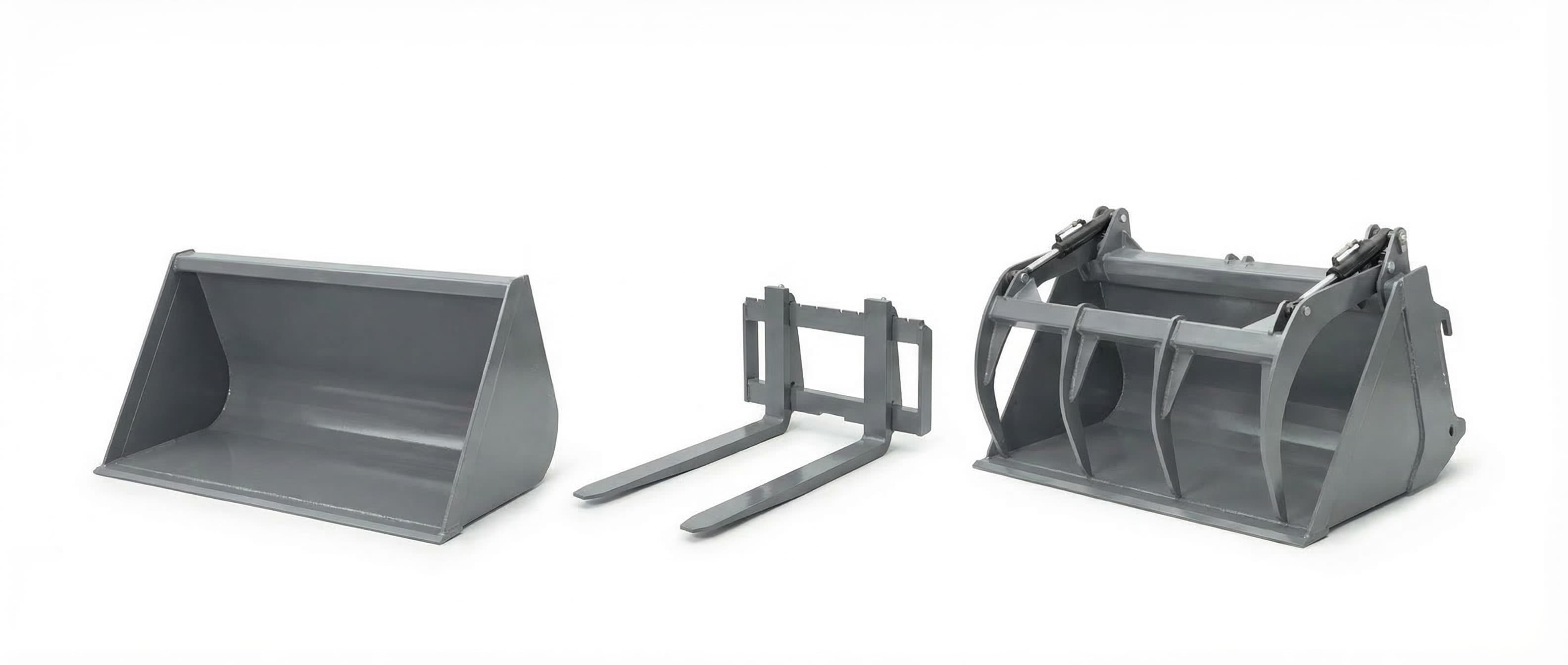
Choosing the right attachment is just as important as choosing the machine itself. Common agricultural attachments include:
- standard bucket
- pallet fork
- bale fork or bale grab
- 4-in-1 bucket
- material pusher blade
For example, if bale handling is the main job, it is not enough to decide based only on a general-purpose bucket. If palletized material flow is heavy, fork attachments make a clear difference in efficiency. That is why the machine and attachment set should be planned together before purchase.
5. Put total cost of ownership ahead of short-term purchase price
One of the most common SEO questions is, "Which loader is the better choice?" The right answer is based less on the purchase price and more on total cost of ownership.
Evaluate these items together:
- fuel consumption
- maintenance frequency
- operator learning time
- spare-parts access
- time saved in daily work
Even if the machine costs more upfront, it can still be the better investment if it speeds up the workflow and improves daily cycles per operator.
Which approach makes more sense for which type of operation?
The rule is simple:
- If you need high maneuverability for light-to-medium daily work in tight spaces, a compact solution stands out.
- If you need versatile agricultural use, balanced capacity, and medium-intensity cycles, a mid-class solution makes more sense.
- If you handle heavy loads, high stacking, or intensive unloading, a stronger platform is required.
To make that distinction clearer, it helps to review the technical details on the product pages: H10T, M16T, M25T.
Frequently asked question
Is a telescopic loader or a compact loader more practical for agriculture?
That depends entirely on the task list. Compact machines have the advantage in tight spaces and short-cycle jobs. In agricultural scenarios that require higher reach and heavier lifting, the telescopic format becomes the stronger option.
What is the most important criterion for bale stacking?
Not just lift capacity. Safe reach height and attachment compatibility are also critical.
Can one machine handle multiple jobs?
Yes, but that requires the right attachment set and a capacity choice that matches the real workflow.
Conclusion
Choosing a telescopic loader for agriculture should never be based on a single technical figure. When you evaluate the daily task list, reach needs, ground conditions, attachment compatibility, and total cost together, the decision becomes much clearer. The simple approach is this: define the work first, then choose the machine.
Quick decision table for agricultural operations
Agricultural loader selection becomes clearer when bale handling, feed work, and high dumping needs are separated.
| Task | Main need | Model direction |
|---|---|---|
| Tight barns and feed alleys | Compact size and maneuverability | H10T |
| General farm use | Balanced capacity and attachment fit | M16T |
| High stacking and heavier loads | Reach and stability | M25T |