

On most farms, the biggest time losses usually come from small but repeated tasks. Bale handling, feed pushing, pen cleaning, bedding distribution, and pallet movement happen over and over throughout the day. That is why choosing a compact loader for farm use is not only a technical decision, but an operational one.
Compact loaders can significantly improve daily farm flow, especially in narrow passages and areas that require constant direction changes. The main objective is not to buy a bigger machine. It is to complete the daily job with the least amount of wasted time.
Why does a compact machine offer an advantage on the farm?
Working areas on a farm are often limited. Feed alleys, barn surroundings, storage-front zones, and entrances to covered areas should not be treated like wide open construction sites. That makes these advantages important:
- easy maneuvering in confined spaces
- fast forward-reverse work
- clearer operator visibility
- practical use in short daily cycles
In operations that repeat the same jobs every day, agility can be more valuable than a larger rated capacity on paper.
What should you focus on for bale handling?
The most common mistake in bale work is focusing only on whether the machine can lift the bale. For a safe and efficient bale-handling flow, these four points should be considered together:
- bale type and weight
- stacking height
- ground stability
- the correct bale attachment
Round and square bales behave differently because their load centers are not the same. If daily workload is high, even the time spent changing attachments affects total efficiency.
Feed work requires precision as much as speed
Speed matters in feed pushing and feed loading, but control precision is just as important. Tight spaces require a smooth and predictable workflow rather than an aggressive one. That is why it makes sense to prefer models that are easy for operators to adapt to, offer clear visibility, and feel predictable through the controls.
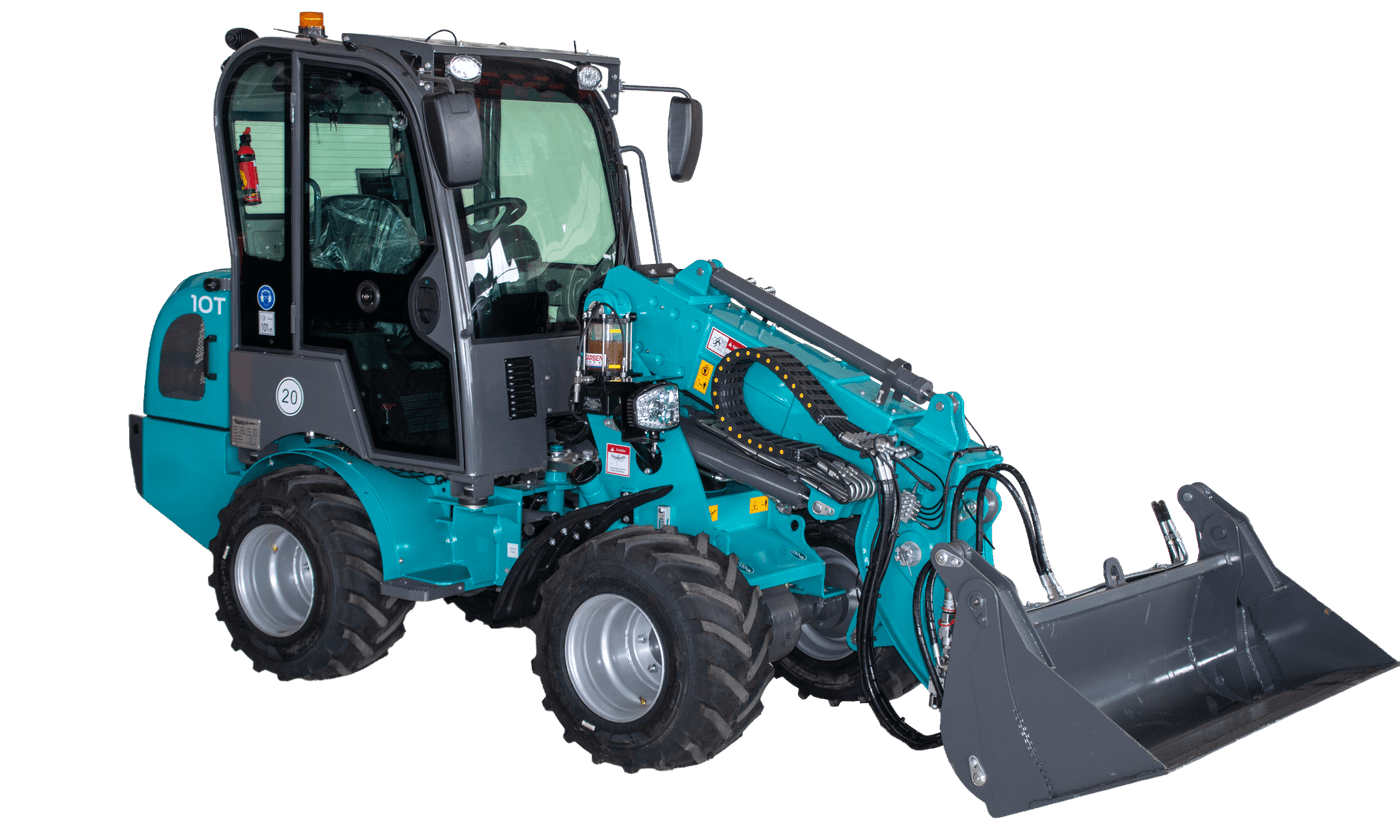
For this kind of scenario, H10T, which represents the compact approach in the product range, is a practical reference point for daily farm duties.
Why is the right attachment choice so important?
Trying to solve every job on the farm with one single attachment usually reduces efficiency. When the right tool is matched to the job, cycle times get shorter and operator error drops.
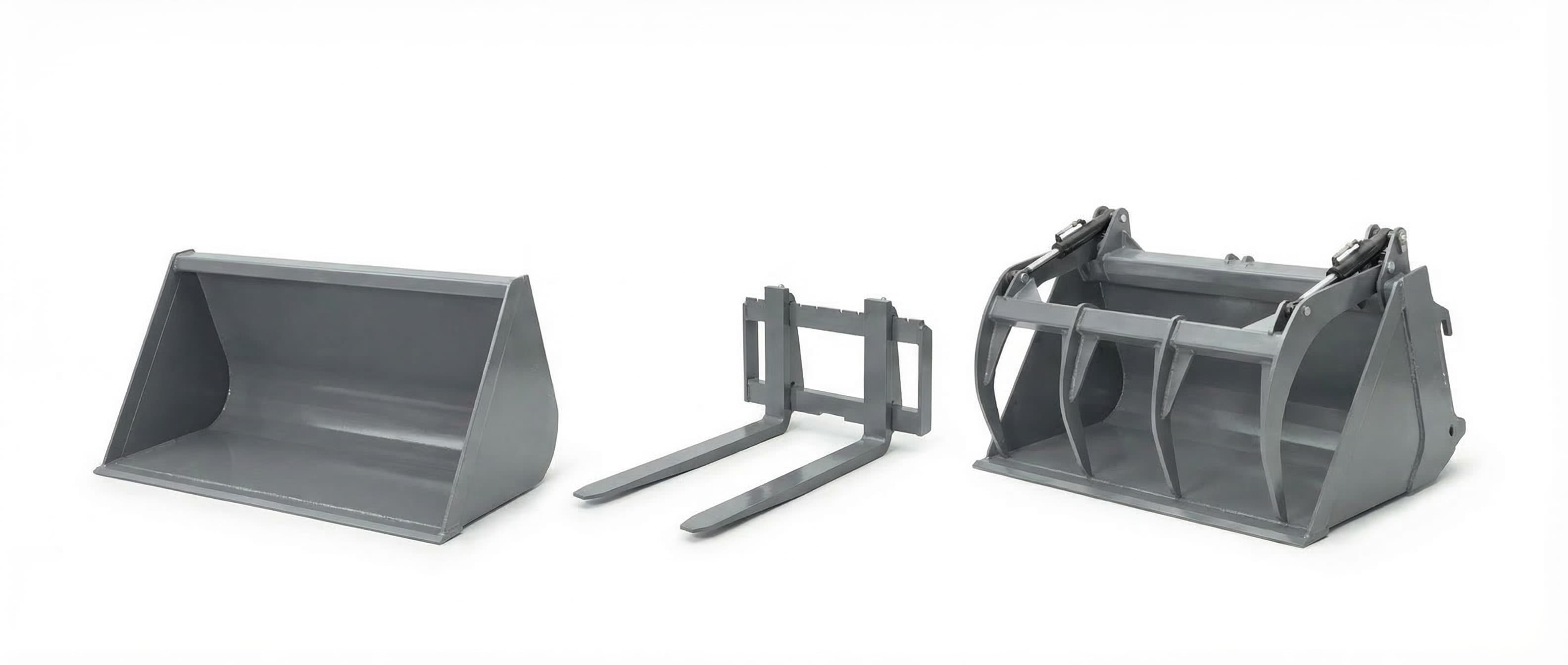
Common attachments include:
- bale fork
- bale grab
- standard bucket
- pallet fork
- 4-in-1 bucket
For example, if the same machine will handle feed, pallets, and cleaning, the attachment plan should be built around quick changes from the beginning.
Daily maintenance discipline still matters on compact machines
The idea that a compact machine is always easy and carefree to run is misleading. Small and agile machines still require regular maintenance under intensive use. In farm conditions, these risks appear often:
- dusty environments
- moisture and mud
- short but intensive cycles
- multiple operators using the same machine
That is why machines with easy service access, practical daily checks, and simple operation are the safer long-term choice.
For which farms does a compact loader make the most sense?
A compact solution is often advantageous in these scenarios:
- narrow use around barns and feed alleys
- daily bale and feed operations
- frequent short-distance transport
- a need for a practical machine that multiple operators can use
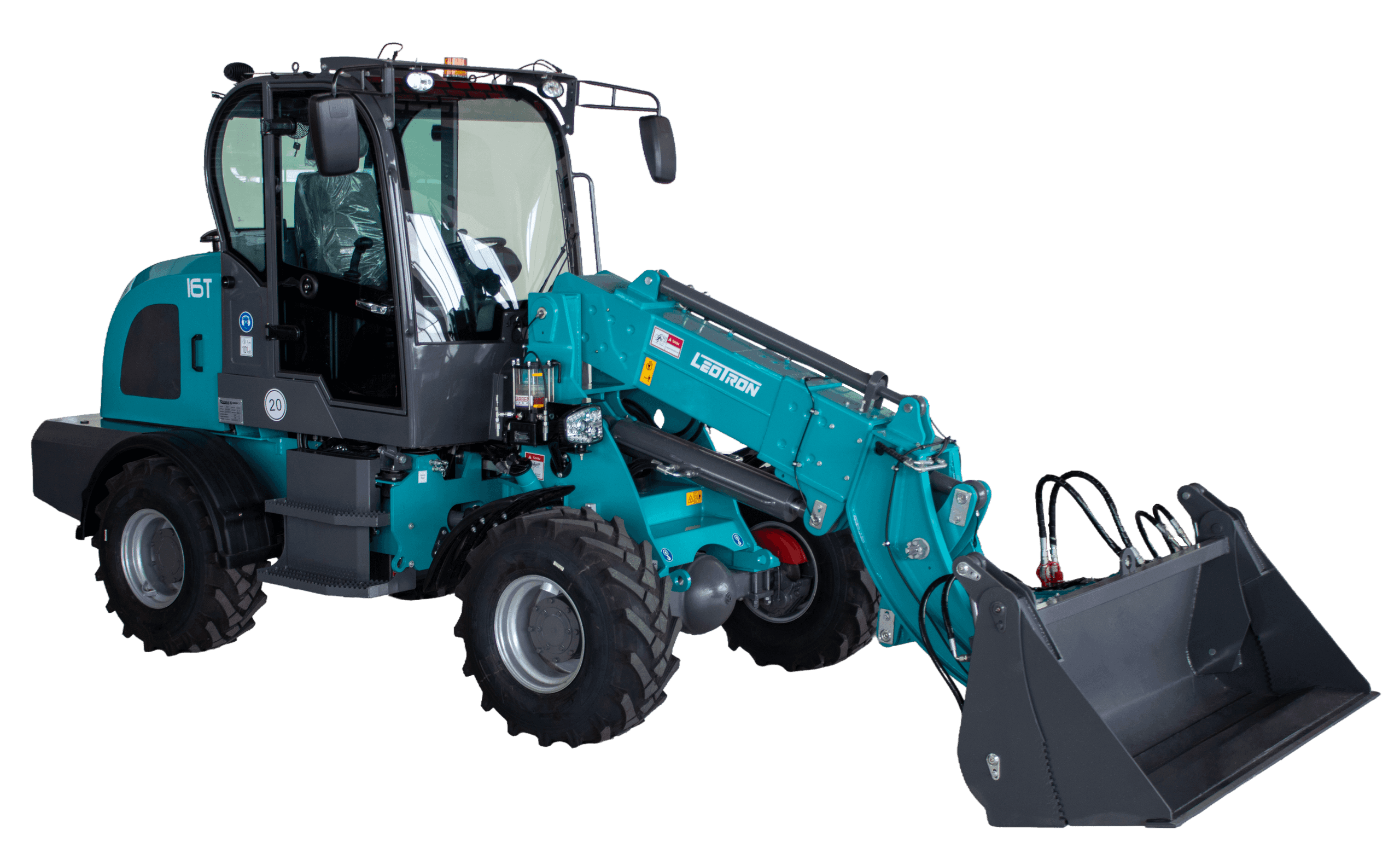
If the workflow requires heavier loads, higher stacking, or more intensive site cycles, stronger alternatives such as M16T or M25T should also be evaluated.
Frequently asked question
What should be checked first when buying a compact loader for a farm?
The daily task list should be checked first. The machine size alone should not drive the decision. What matters is what work is done and how often.
Can the same machine handle bale transport and feed pushing?
Yes. With the right attachment plan, a single machine can manage multiple daily jobs efficiently.
Is a larger machine always more productive?
No. On farms with narrow spaces and short cycles, a larger machine can reduce maneuverability, which weakens its theoretical advantage in practice.
Conclusion
Choosing a compact loader for a farm should be driven by the goal of making the daily workflow easier. When agility, visibility, attachment compatibility, and serviceability are evaluated together for bale, feed, and cleaning operations, the better choice becomes clear. For many farms, a simple, controlled, and correctly sized solution delivers the highest efficiency.
Bale and feed operation checklist
When one compact loader is expected to handle bale, feed, pallet, and cleaning work, the attachment plan becomes part of the buying decision.
| Daily task | Critical criterion | Note |
|---|---|---|
| Bale handling | Visibility, balance, bale attachment | Round and square bales behave differently. |
| Feed pushing | Control precision | Agility can matter more than rated capacity. |
| Pallet work | Fork compatibility | Forks can reduce cycle time when pallet handling is frequent. |